
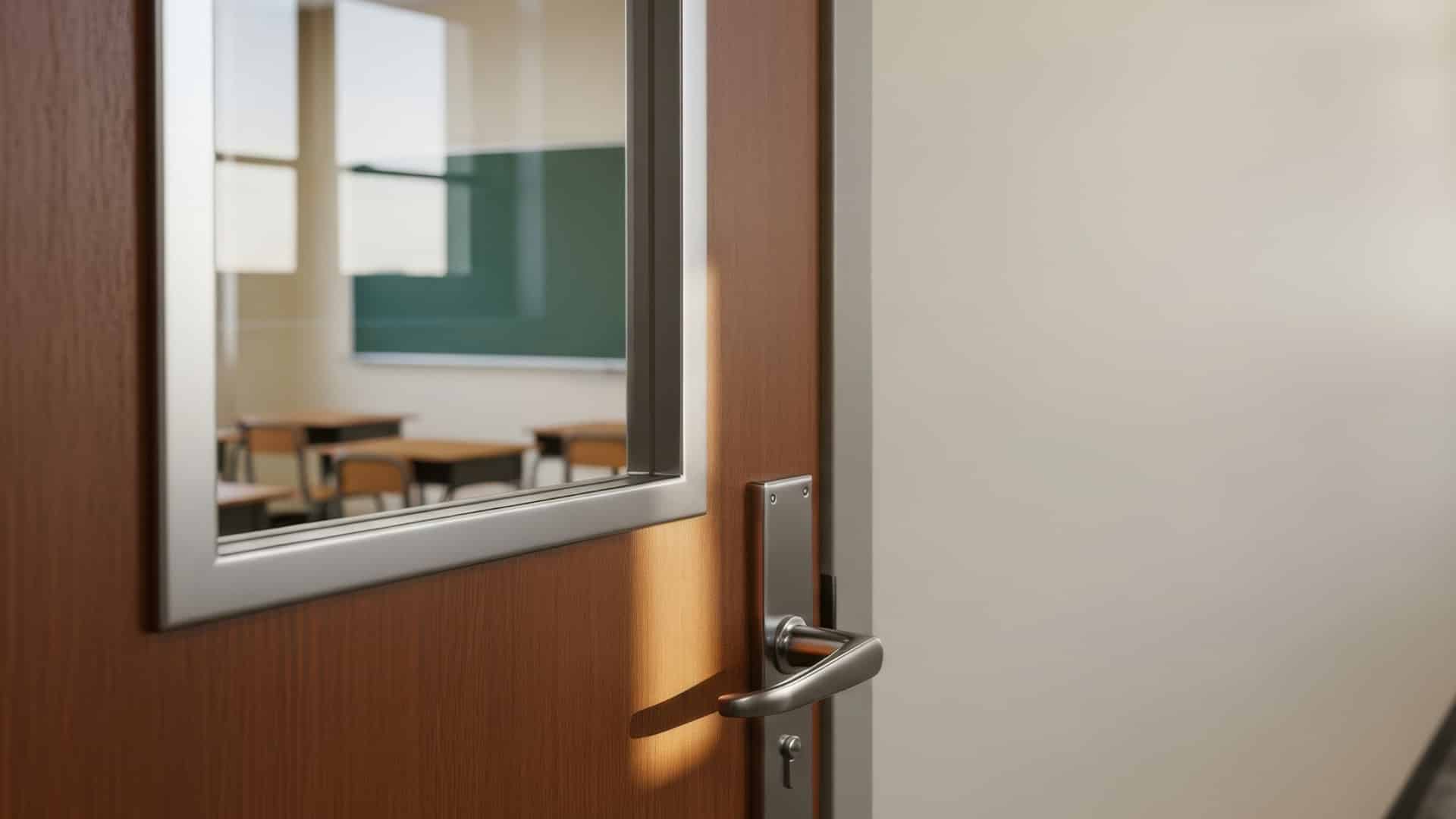
Classroom doors are one of the first things schools look at when reviewing building security, and for good reason. They’re one of the most consistent points of contact between students, staff, and potential threats. But securing a classroom door isn’t as straightforward as swapping in a stronger lock.
The door, frame, hardware, glass, visibility, and how your staff actually uses the space all factor into whether that door does its job when it needs to. Here’s a practical look at what schools should think through when figuring out how to secure a classroom door effectively.
Start With What You Already Have
Before you look at any upgrades, take a close look at what’s already in place. A classroom door may look solid from the hallway, but its actual performance depends on the full system: the door slab, frame, hinges, locking hardware, door closer, any glass panels, and the surrounding wall condition.
A strong lock doesn’t help much if the frame flexes under pressure. A reinforced door still has a vulnerability if the glass panel next to it isn’t addressed. These aren’t hypotheticals; they’re the kinds of gaps we find regularly when walking through schools.
A few practical questions to start with:
- Does the door close and latch consistently on its own?
- Can staff secure it quickly during an emergency, without fumbling?
- Is the locking mechanism easy for authorized staff to operate under stress?
- Does the door have glass that creates visibility concerns during lockdown?
- Is the frame in good enough condition to support upgraded hardware?
- Are all classroom doors consistent, or do some rooms have older or mismatched setups?
That last question matters more than people expect. In a lot of schools, some classrooms have older doors, different locks, or hardware added during past upgrades that was never fully integrated into the safety plan. Inconsistency makes emergency planning harder, especially when staff are trained to respond quickly and need to know every room works the same way.
This is why classroom door security should start with an honest assessment of what’s there, not a shopping list.
Door Security Devices: A Direct and Practical First Step
For many schools, door security devices are one of the most direct ways to improve classroom protection without a full door replacement. These devices are designed to help staff secure a room faster during an emergency, and they come in different configurations depending on how your doors are built.
Iron Badger Defense Solutions works with three main types of classroom door security devices: rapid deployment locking systems for situations where staff need to act in seconds, inward-swinging door stoppers that lock into a floor plate at the base of the door, and outward-swinging door locks designed for metal-framed doors that open away from the room. Which one fits your building depends on your door type and frame, and in many schools, the answer is more than one.
When evaluating door security devices, the key questions are straightforward: Can trained staff deploy it quickly? Does it work with the existing door and frame? Does it fit your lockdown procedures? And does it meet your school’s safety and code requirements?
The goal isn’t to add complexity. In fact, simpler is usually better. If a device is hard to reach, confusing to use, or only works under ideal conditions, it’s going to fail when it matters most. The right solution should be practical for real staff, in real classrooms, under real pressure.
Don’t Overlook Glass and Visibility
Classroom doors with windows or sidelights are common, and they serve a real purpose during normal school operations. Teachers can see who’s outside. Staff can monitor hallways. But during a lockdown, that same visibility creates a problem.
Lockdown safety shades are one practical way to address this. They let you control visibility quickly when needed without permanently altering the door or blocking natural light the rest of the time. It’s a straightforward solution that’s often overlooked until someone points out the gap.
Glass itself also warrants a closer look. Depending on the location and size of glass panels, Schools may want to consider security film vs bullet-resistant glass, or other protective measures depending on the level of protection needed. This doesn’t mean every door needs a full glazing upgrade, but it does mean glass shouldn’t be an afterthought when you’re evaluating door security.
When to Consider Bullet-Resistant Doors
Most standard classroom doors aren’t designed for ballistic protection. They’re built for daily use, access control, and fire code compliance, which is appropriate for the majority of classroom spaces.
That said, some areas of a school building warrant a higher level of protection. Main entry vestibules, administrative offices, secure access points, and other high-traffic or high-priority locations may be good candidates for bullet-resistant doors depending on the facility’s layout and security goals.
This isn’t an all-or-nothing decision. Schools don’t have to replace every door to meaningfully improve security. Identifying which locations carry the most risk and addressing those first is a practical approach that most districts can actually implement, especially when working within grant funding or phased budget cycles.
Keep Compliance in Mind as You Plan
Any classroom door upgrade should improve security without creating problems for staff, students, first responders, or code requirements. That balance matters.
A door that’s harder for unauthorized people to open also needs to support safe evacuation and emergency access. Changes that block exits, create accessibility barriers, or complicate first responder entry can create new problems while solving old ones.
In Missouri, schools may also be reviewing door security in the context of Missouri Senate Bill 68, which has specific implications for anti-intruder door locks and school security requirements. If you’re working through that process, it’s worth understanding how your door upgrades align with what the legislation requires.
Security improvements should be planned, not improvised. That’s true whether you’re addressing a single vulnerable door or reviewing the full building.
Classroom Doors Are One Layer, Not the Whole Plan
A secure classroom door is a meaningful piece of a school’s security posture, but it works best when it fits into a broader plan. Controlled entrances, visitor management, access control, staff training, and lockdown procedures all work together. The question worth asking isn’t just ‘will this fix the problem?’ It’s ‘how does this fit into what we’re already doing, and what does it make possible next?’ That kind of thinking leads to security improvements that actually hold up over time.
The best security plans are layered, practical, and realistic. They help reduce vulnerabilities and give staff more time to respond. No single upgrade does everything, but the right combination of improvements can make a meaningful difference.
Not Sure Where Your Classroom Doors Stand?
If you’re not confident that your classroom doors can be secured quickly and reliably in an emergency, that’s worth taking seriously. It doesn’t necessarily mean everything needs to be replaced. It means you need a clearer picture of where the gaps are before you decide what to do about them.
A professional security assessment can evaluate your existing doors, identify specific vulnerabilities, and help you prioritize upgrades that make sense for your building’s layout, staff, and budget. It separates real concerns from assumptions and gives you something concrete to work from.
Iron Badger Defense Solutions works with schools and facilities across Jefferson City, Springfield, Cape Girardeau, and throughout Missouri to assess classroom door security and recommend practical protective measures. If you’re not sure where to start, that’s exactly what we’re here to help with.
Contact Iron Badger Defense Solutions at (573) 301-0097 to schedule a security assessment.
Frequently Asked Questions
How do you secure a classroom door that opens outward?
An outward-swinging door requires a different type of security device than an inward-swinging one. There are approved options designed specifically for outward-swinging classroom doors. The right choice depends on the door, frame, and your school’s safety requirements, which is why it’s worth having those doors evaluated specifically.
Can a classroom door be secured without replacing it?
In many cases, yes. Door security devices, reinforced hardware, lockdown shades, and safety film can all improve security without a full door replacement. Whether that’s the right approach depends on the condition of the existing door and frame, which a professional assessment can help determine.
When should a school bring in a professional security assessment?
If staff aren’t confident they can secure classroom doors quickly, if doors have inconsistent hardware across the building, if there are exposed glass panels that haven’t been addressed, or if the district is planning safety upgrades or applying for security funding, a professional assessment is a good starting point. It helps you make informed decisions instead of guessing.
Do classroom door upgrades need to meet fire and safety codes?
Yes. Any door upgrade needs to support safe evacuation, meet accessibility requirements, and allow first responder access. Changes that block exits or complicate emergency response can create new problems. That’s one reason professional review matters before making changes.