
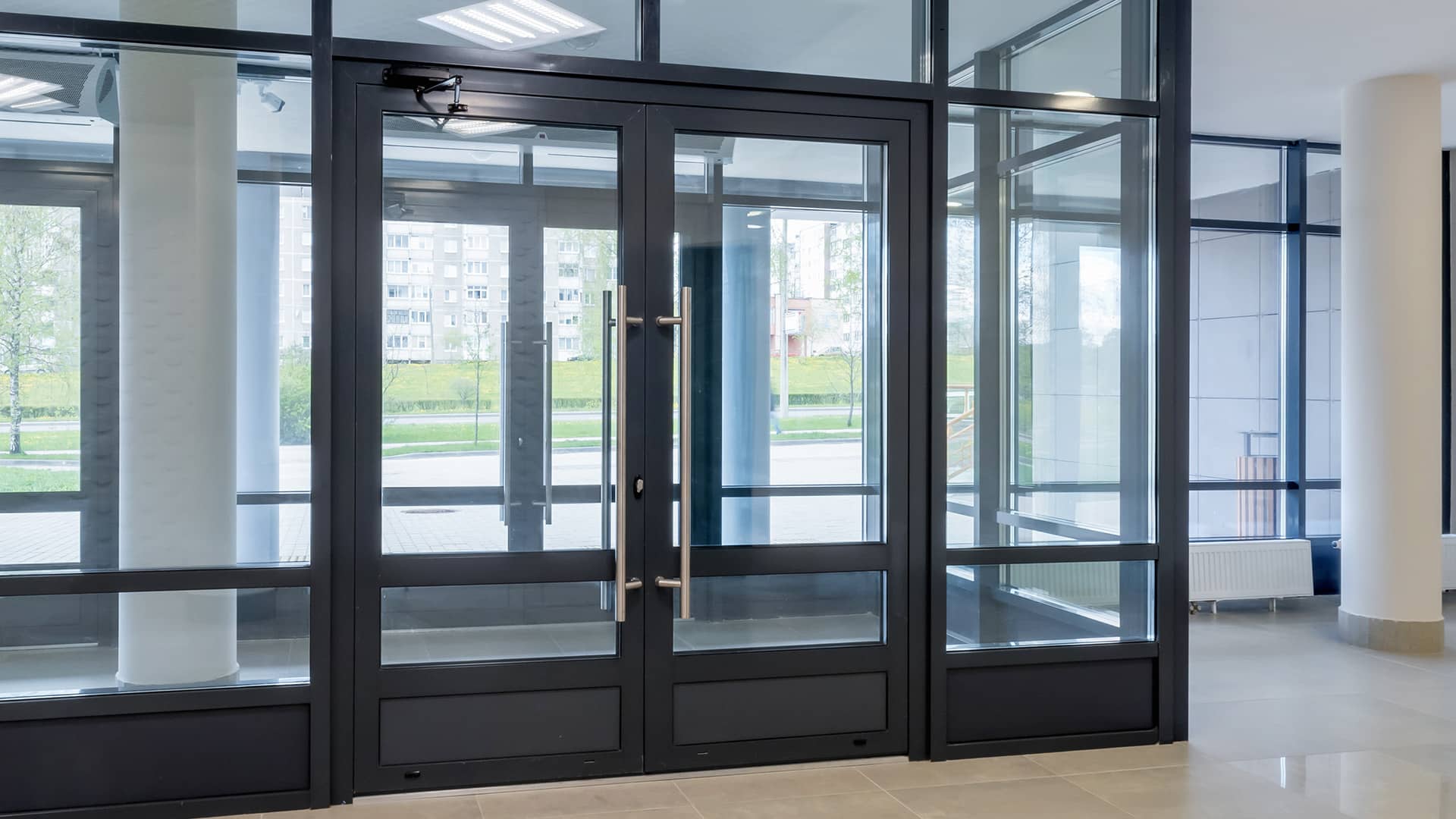
Facility security planning often introduces terms that are not always familiar at first. For schools, government buildings, healthcare facilities, and commercial properties, one of those terms may be a FEBR door.
A FEBR door, short for Forced Entry Bullet-Resistant door, is designed to help delay forced entry while also providing ballistic resistance under specific tested conditions. These systems are often used in high-priority entrances where additional protection may be needed.
This guide explains what FEBR doors are, how they differ from standard doors, where they are commonly used, and how they fit into modern facility security planning.
What Makes a FEBR Door Different?
FEBR doors combine forced-entry resistance with ballistic protection under tested conditions, while a standard commercial door is typically designed for durability, access control, and everyday building use.
Some security doors may provide stronger hardware or improved resistance to forced entry, but that does not automatically mean they are designed to resist ballistic threats.
FEBR door performance also depends on more than the door panel itself. Frames, glazing, hardware, locks, and installation all contribute to how the full assembly performs in real-world conditions.
Here is a simple way to understand the difference:
|
Door Type |
Main Purpose |
Typical Protection |
|
Standard Commercial Door |
Access and durability |
Basic building security |
|
Security Door |
Stronger access control |
Improved forced-entry resistance |
|
Ballistic Door |
Ballistic protection |
Designed to resist specific firearm threats |
|
FEBR Door |
Forced-entry and ballistic resistance |
Designed to resist both forced entry and ballistic threats under tested conditions |
Where Are FEBR Doors Commonly Used?
In many cases, FEBR doors become part of the conversation when a facility is reviewing how public-facing entrances are secured.
Schools may evaluate them for secure vestibules or main administrative entrances. Healthcare facilities may consider them for emergency departments or controlled-access areas. Government buildings and law enforcement facilities may also use FEBR systems where both entry resistance and ballistic protection are priorities.
In most facilities, FEBR doors are typically reserved for higher-priority access points rather than used throughout the entire building.
How FEBR Doors Fit Into Layered Security Planning
In practice, FEBR doors are often evaluated alongside other entrance security measures rather than as standalone upgrades.
For example, a school or healthcare facility may pair FEBR doors with bullet-resistant glass, access control systems, surveillance, or secure vestibule layouts. The surrounding entry system matters just as much as the door itself.
That is why entrance security decisions are often evaluated based on how people move through a building, how visitors are managed, and which access points are considered higher priority.
Professional Security Evaluation and Next Steps
Every facility has different risks, building layouts, access points, and operational needs. A school entrance, government office, healthcare facility, and commercial property may all require different levels of protection.
Not every facility requires FEBR doors. In some cases, a facility may need reinforced glazing, door security devices, access control, or a secure vestibule design instead.
A professional security evaluation can help determine whether FEBR-style protection fits the building’s actual needs, which entry points may require additional attention, and how entrance security upgrades align with the facility’s daily operations and long-term safety goals.
For schools, government facilities, healthcare buildings, and organizations in Missouri and neighboring states, Iron Badger Defense Solutions can help evaluate entry-point security and recommend protective solutions that align with the facility’s broader security plan, with regular service in Jefferson City, Springfield, and Cape Girardeau.
Frequently Asked Questions
What is a FEBR door?
A FEBR door is a Forced Entry Bullet-Resistant door. It is designed to help delay forced entry and provide ballistic resistance under specific tested conditions.
Are FEBR doors bulletproof?
“Bulletproof” is not an absolute term. FEBR doors are designed to resist specific ballistic threats under tested conditions, but performance depends on the full door assembly, materials, hardware, glazing, and threat level.
Where are FEBR doors commonly used?
FEBR doors are commonly used in schools, government buildings, healthcare facilities, law enforcement buildings, secure vestibules, and controlled-access areas where higher levels of entry protection may be needed.