
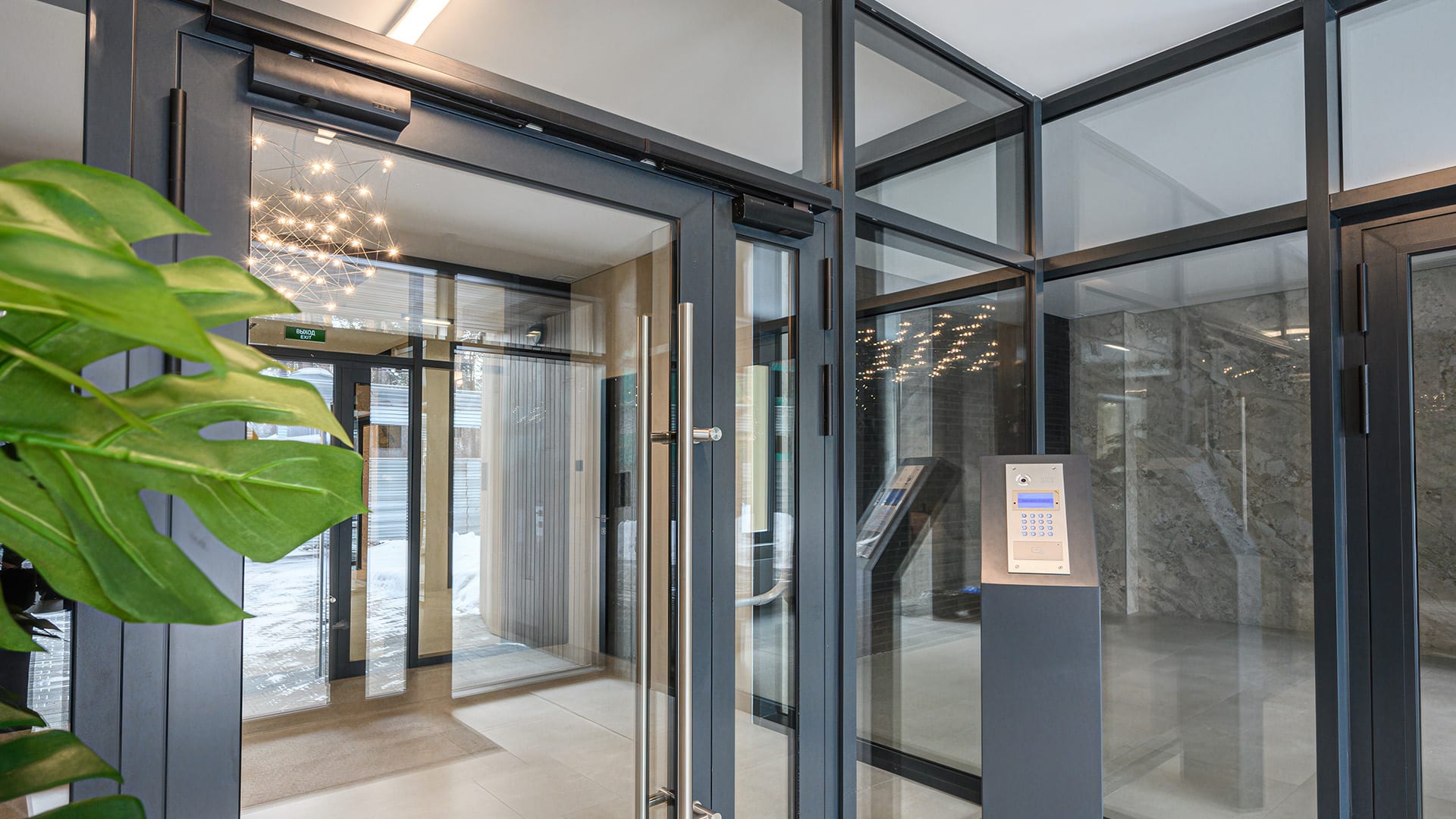
A security vestibule is one of those building features people walk through every day without thinking much about it. But for schools, government buildings, healthcare facilities, and commercial properties, that small entry area can play an important role in controlling who gets inside.
If you’ve heard the term but aren’t quite sure what a security vestibule actually is or what makes one different from a regular building entrance, you’re not alone. It’s a fairly simple concept once it’s explained, but it gets thrown around loosely enough that the meaning isn’t always clear.
Not every vestibule is built the same way, either. Some are basic entry areas. Others include access control, reinforced glass, secure doors, cameras, intercoms, or visitor check-in procedures. The right setup depends on the building, the people using it, and the level of control the facility actually needs.
What Is a Security Vestibule?
A security vestibule is a controlled entry area designed to help manage access before someone enters the main part of a building. In a school, that might be the space between the exterior entrance doors and the locked interior doors leading into student areas. In a hospital or government building, it might look a little different, but the idea stays the same.
The purpose isn’t just to create a waiting area. It’s to give staff more control over who comes through and when.
A well-planned security vestibule can help direct visitors to the main office or check-in point, separate public entry from restricted areas, support access control procedures, improve staff visibility, and add another layer between the exterior entrance and interior spaces.
Security vestibules come up a lot in school safety planning, but they’re not limited to schools. You’ll also find them in courthouses, municipal buildings, hospitals, clinics, corporate offices, and other facilities where controlled entry matters.
Entry Vestibule vs. Security Vestibule vs. Access Control Vestibule
These terms get used loosely, but they don’t always mean the same thing. Here’s a quick breakdown:
|
Term |
Main Purpose |
What It Usually Includes |
|
Entry Vestibule |
Creates a basic transition space |
Two sets of doors, lobby entry, weather buffer |
|
Security Vestibule |
Helps control visitor entry |
Locked interior doors, check-in point, reinforced glass or doors |
|
Access Control Vestibule |
Manages who can enter |
Card readers, intercoms, cameras, electronic locks |
|
Mantrap |
Restricts movement between two controlled doors |
More common in higher-security environments |
In most schools and public facilities, the goal isn’t to create a highly restrictive mantrap. It’s to create a controlled entry area where visitors can be screened before they access the rest of the building.
Why Security Vestibules Matter for Schools and Other Facilities
The front entrance is one of the most important areas in any building security plan. It’s where visitors, staff, students, patients, vendors, and the public usually enter first.
In schools, this matters because the main entrance is often the point where visitors move from the outside straight into spaces used by students and staff. If the entrance opens directly into hallways or common areas, the school has less control over who enters and where they go from there. A security vestibule helps create a more controlled process instead.
Picture it this way: a visitor enters through the exterior doors, stops inside the vestibule, communicates with office staff, and only gets through the interior doors after being approved. That simple separation can make a real difference in how a school manages visitor access.
The same basic idea applies elsewhere. Government buildings use vestibules to manage public entry before granting access to offices or secure areas. Healthcare facilities use them to guide patients and visitors toward check-in. Commercial buildings use them to control access to employee-only or tenant-only spaces. The design changes from one building to the next, but the purpose stays the same: control entry before someone reaches the interior.
When Should a Facility Consider a Security Vestibule?
A school or facility might want to consider a security vestibule if the current entrance doesn’t provide enough control over visitor access. A few common signs worth paying attention to:
- Visitors can walk directly into hallways or interior areas without stopping anywhere first
- Check-in happens after someone is already inside the building, not before
- Staff have limited visibility of who’s entering at any given moment
- Exterior and interior doors aren’t controlled separately
- The building is planning renovations, entrance upgrades, or a broader safety review
- The facility is applying for security funding and needs to identify priority upgrades
- The current entrance layout no longer fits how the building is actually used day to day
None of this automatically means a full renovation is required. Sometimes, targeted upgrades like access control, reinforced glazing, secure doors, or better visitor flow can solve much of the problem without a complete redesign. The key is understanding the current layout first.
A school built decades ago probably wasn’t designed around today’s visitor management needs. A healthcare facility might have a public entrance that works fine during the day but creates issues after hours. A government building might need to separate public lobby access from staff-only spaces entirely. Every building is different, so the right vestibule design depends on the facility’s layout, traffic flow, and actual security goals.
Once you’ve identified the gap, the next question is what kind of setup actually closes it.
What Features Can Be Part of a Security Vestibule?
A security vestibule isn’t one specific product. It’s a planned entry area that can include several different security features, and not every vestibule needs every feature. A small school entrance needs a different setup than a courthouse, hospital, or large commercial facility.
For schools, glass is often the first thing worth reviewing. A lot of entry areas include sidelights, office windows, or glass panels near doors. Depending on the layout, a facility might consider safety and security film or stronger bullet-resistant glass to address those vulnerabilities directly.
Doors matter just as much. A security vestibule is only as strong as the doors and hardware supporting it. Some buildings need reinforced doors, upgraded locking systems, or bullet-resistant doors in higher-priority areas, and door security devices often come into play too, especially when securing interior doors, controlled offices, or other restricted spaces nearby.
Visibility is a detail that’s easy to overlook. Vestibules and front offices usually include glass that lets staff see visitors, which is genuinely helpful during normal operations. But during certain emergency situations, that same visibility can become a liability, which is where lockdown safety shades are worth considering.
How Security Vestibules Fit Into Layered Security Planning
A security vestibule shouldn’t be treated as a standalone fix. It’s one layer in a larger facility security plan that includes controlled entrances, visitor management procedures, reinforced doors and glass, access control, cameras, staff training, lockdown procedures, and interior security upgrades.
This matters especially for schools. A secure front entrance is valuable, but it doesn’t replace the need to evaluate classroom doors, windows, communication procedures, and emergency response planning. A school might have a well-designed entry vestibule and still have classrooms with outdated locks or exposed glass panels. In that case, entrance security is only one part of the bigger picture, which is why classroom door security often comes up during the same planning conversation.
Not Sure Whether Your Entrance Needs a Security Vestibule?
If you’re not confident your current entrance provides the level of control your facility actually needs, that’s worth a closer look before deciding on any upgrade.
A professional security assessment can evaluate your current entry layout, identify potential vulnerabilities, and determine whether a security vestibule, reinforced glass, secure doors, access control, or other protective measures make sense for your specific building.
Iron Badger Defense Solutions works with schools and facilities across Jefferson City, Springfield, Cape Girardeau, and throughout Missouri to assess entrance security and recommend practical solutions based on your building’s layout, visitor flow, and security goals.
Contact Iron Badger Defense Solutions at (573) 301-0097 to schedule a security assessment.
Frequently Asked Questions
What is a security vestibule?
A security vestibule is a controlled entry area between the outside entrance and the main interior of a building. It helps manage visitor access before someone reaches classrooms, offices, patient areas, or other restricted spaces.
What is the purpose of a security vestibule?
The purpose is to create a controlled point of entry. It can help direct visitors, support check-in procedures, reduce unauthorized access, and separate public entry areas from interior spaces.
What is an example of a security vestibule?
In a school, a visitor might enter the exterior doors into a vestibule, speak with office staff through a check-in window or intercom, and only gain access through the interior doors after being approved. Similar setups show up in government buildings, healthcare facilities, and commercial properties.
Can a security vestibule help prevent tailgating?
It can help reduce tailgating by creating a controlled entry point before interior access is granted, but effectiveness depends on the layout, the access control system, staff procedures, and how consistently the vestibule is actually used day to day.
Does every school or facility need a security vestibule?
Not every building needs the same level of entrance control. Whether a security vestibule makes sense depends on the entrance layout, visitor flow, existing doors and glass, access control needs, and the facility’s overall security goals.